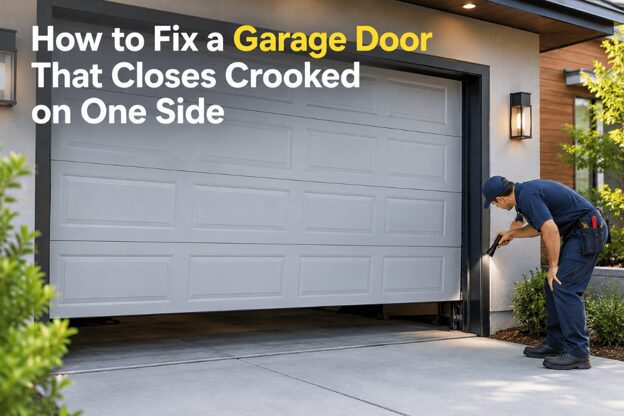
How to Fix a Garage Door That Closes Crooked on One Side
A garage door that closes crooked on one side does not stay level as it moves down the tracks, so one side reaches the floor before the other. This usually signals garage door alignment problems such as damaged or misaligned tracks, worn rollers, loose hardware, cable problems, spring issues, or an unbalanced door. Homeowners should never force a crooked door or adjust high-tension springs and cables themselves. A professional inspection can find the cause of the uneven movement and show which parts need attention.
- Basic Safety Checks: Best for spotting visible problems like obstructions, unusual movement, or obvious damage without attempting repairs.
- Professional Garage Door Repair: Best when the door stays crooked or has damaged tracks, cables, springs, rollers, or other parts that need trained service.
Why Is My Garage Door Closing Crooked on One Side?
Crooked Garage Door Definition
A crooked-closing garage door does not remain level as it moves down the tracks. One side may reach the floor before the other, the door may look tilted, or one side may rub or move differently from the other. It is a clear sign of garage door operation problems that need attention.
Read More : Garage Door Repair vs. Replacement: Which Delivers Better ROI?
How Does a Garage Door Become Misaligned?
A garage door relies on tracks, rollers, cables, springs, hinges, and hardware to move correctly. A damaged or misaligned track can disrupt movement, and worn rollers cause rough or uneven operation. Loose hardware can throw off alignment, while a loose, damaged, or broken cable can leave the door crooked. Spring problems can upset its balance. Continued use with a damaged component often makes things worse.
Signs Your Garage Door Is Closing Unevenly
- One side reaches the floor before the other
- The bottom of the door looks uneven
- The door rubs against one side of the track
- The door shakes while opening or closing
- The door moves slowly or unevenly
- A cable appears loose or damaged
- The tracks appear bent or out of alignment
- The door makes unusual sounds during operation
What Happens When a Garage Door Closes Crooked?
When a garage door closes unevenly, it is rarely a random event. It usually points to a problem with one or more components, and the symptoms tend to build over time. Recognizing those symptoms early helps homeowners decide when professional inspection is needed instead of continuing to operate the door and hoping the problem corrects itself.
A door that once moved evenly may start to shake, rub, or sit slightly lower on one side before it finally closes crooked. Each stage places a little more strain on the opener, the tracks, and the other parts that support the door.
The timeline below shows how a garage door alignment problem can progress from normal operation to a situation that calls for repair, and why stopping to have the door checked is safer than forcing it to keep working. Use it as a simple guide for what to watch for around your own garage door, and treat each stage as a chance to act before the damage spreads.
Garage Door Alignment Problem Timeline
| Step | What Happens |
| Normal Operation | The garage door moves evenly along both tracks while the rollers, cables, springs, and hardware work together. |
| Component Wear or Damage | A roller, track, cable, spring, hinge, or other component may become worn, loose, damaged, or misaligned. |
| Uneven Movement Begins | One side of the garage door may begin moving differently from the other side. |
| Door Becomes Crooked | One side may sit higher or lower, or one side may reach the floor before the other. |
| Additional Strain | Continuing to operate the door may place additional stress on the opener and other garage door components. |
| Safety Concern | A significantly crooked, heavy, shaking, or damaged door may be unsafe to operate. |
| Professional Inspection | A trained technician can inspect the tracks, rollers, cables, springs, hardware, and other components to identify the cause. |
| Repair or Replacement | Depending on the condition of the components, the appropriate repair, replacement, or adjustment can be determined. |
The Mechanics Behind an Uneven Garage Door
Garage doors move along tracks as they open and close, and rollers guide the door through those tracks. Cables work with the springs and other components to support door movement, while the springs help carry the weight of the garage door.
For the door to rise and lower evenly, the tracks need to stay properly positioned. When one part of this system weakens, the others compensate, and that is often when a door begins to look crooked. Worn rollers can contribute to shaking or uneven operation.
Loose or damaged hardware can change how the door moves along the tracks. A damaged or loose cable can let one side hang lower than the other, and spring problems can upset the overall balance of the door. Continuing to use a visibly damaged or crooked door can increase stress on the whole system, which is why a small garage door spring imbalance or alignment issue can turn into a larger repair when ignored.
Garage Door Alignment Repair Options and Limitations
Fixing the cause of a crooked door does more than make it look straight. Proper garage door track alignment and component repair can restore balance to the system, but it helps to understand both the advantages and the limits before deciding what to do. Here is what homeowners can reasonably expect from alignment repair, and where its boundaries lie.
Benefits of Proper Garage Door Alignment and Repair
- Helps restore smoother door movement along both tracks, so the door rises and lowers evenly
- Can address the underlying component problem, not just the symptom you can see
- May reduce additional stress on the garage door system, including the opener
- Can improve reliable opening and closing every day, which matters most on busy mornings
- Helps identify worn or damaged components early, before they cause further damage
- Supports safer garage door operation for your household and anyone near the door each day
Limitations of Garage Door Alignment Repair
- The exact cause cannot always be identified from visual inspection alone, so a closer look may be needed
- Damaged tracks may require professional repair rather than a quick adjustment
- Broken or damaged cables should not be repaired by homeowners because of the tension involved
- Garage door springs contain stored tension and require trained handling, so they are never a DIY job
- Severely damaged doors or components may need replacement rather than a simple adjustment, which can change the cost and timing
How to Fix and Prevent a Garage Door That Closes Crooked
A little preparation helps your appointment go smoothly and keeps your household safe in the meantime. The steps below cover what to do before the technician arrives and how to protect your garage door afterward, so garage door alignment issues do not return.
Before Your Appointment
- Stop operating the door if it is severely crooked or damaged
- Do not force the garage door open or closed
- Do not attempt to adjust springs or cables
- Look for obvious damage to tracks, rollers, or cables without touching them
- Note when the uneven movement occurs
- Tell the technician about unusual sounds, shaking, or recent problems
Aftercare and Maintenance Tips
- Follow the technician’s recommendations
- Pay attention to unusual sounds or uneven movement
- Do not ignore recurring alignment problems
- Keep the door system free from obvious obstructions
- Arrange professional garage door maintenance when needed
- Avoid DIY adjustments to high-tension components
Does Fixing a Crooked Garage Door Require Professional Help?
It depends on the cause and severity. A simple visible obstruction may be easy to clear, but damaged tracks, cables, springs, rollers, or other mechanical components can require professional service. Homeowners should avoid forcing or manually adjusting a heavy or damaged garage door.
Garage Door Repair vs. DIY Adjustment: Which Is Right for You?
Both approaches have a place, and the right choice depends on how severe the uneven movement is, the condition of the garage door components, and whether there is visible damage. A basic safety check is a reasonable first step when the door is only slightly off, because it can reveal an obstruction or an obvious problem without putting anyone at risk.
It is not a repair, though, and it should never involve touching springs or cables. Professional garage door repair is the better path when the door stays crooked, shakes, sits unevenly, or shows damaged or worn parts. A trained technician can inspect the full system, find the real cause, and repair it safely instead of treating only what is visible.
The comparison below shows how the two approaches differ, so you can decide which one fits your situation. If you are unsure, remember that a crooked door is rarely a problem that fixes itself, and waiting usually adds cost and risk. When in doubt about the condition of springs, cables, or tracks, treating the door as a professional repair is the safer choice for your home and your family.
| Feature | Basic Safety Check | Professional Garage Door Repair |
| Primary Goal | Identify obvious and safe-to-observe problems | Find and address the underlying garage door problem |
| Approach | Visual inspection without touching high-tension components | Professional inspection and repair |
| Best For | Obstructions or basic visible checks | Crooked doors, damaged components, alignment problems, and recurring issues |
| Tracks | Check visually for obvious damage or obstruction | Inspect and repair damaged or misaligned tracks |
| Rollers | Observe unusual movement or noise | Inspect worn or damaged rollers |
| Cables | Look for obvious visible damage from a safe distance | Professional cable inspection and repair |
| Springs | Do not attempt adjustment | Professional spring inspection or replacement |
| Long-Term Approach | Monitor for recurring problems | Repair the cause and maintain the complete system |
| Safety | Avoid touching high-tension components | Trained professionals handle repairs requiring specialized knowledge |
Is Professional Garage Door Repair Right for You?
Not every uneven door is an emergency, but some situations clearly call for a trained technician. A door that repeatedly closes crooked, or one that shows damaged parts, rarely improves on its own. Use the lists below to judge where your door stands and whether it is time to bring in a professional garage door company.
The first list covers situations where service is a smart next step, and the second covers warning signs that mean you should stop using the door right away.
You May Benefit From Professional Garage Door Service If…
- Your garage door repeatedly closes crooked
- One side of the door sits higher than the other
- The door shakes or moves unevenly
- You notice damaged or misaligned tracks
- The door has worn rollers, cable problems, or spring issues
Stop Using the Door and Consider Professional Evaluation If…
- A cable is broken, loose, or frayed
- A spring appears broken or damaged
- The door has become very heavy
- The door is significantly crooked or stuck
- The door has fallen or suffered major damage
Common Crooked Garage Door Myths and Facts
A few common beliefs can lead homeowners toward unsafe shortcuts. Here is what is true.
| Myth | Fact |
| A crooked garage door only needs the opener adjusted | Uneven movement can involve tracks, rollers, cables, springs, hardware, or other components, so the complete system may need inspection. |
| You can force the door closed if one side is higher | Forcing a heavy or damaged garage door can increase the risk of additional damage or injury. |
| A loose garage door cable is safe to reconnect yourself | Garage door cables work with other high-tension components and should be handled by trained professionals. |
| A bent track can simply be pushed back into place | A damaged track can affect door safety and movement and should be professionally inspected. |
| If the door still works, a crooked movement is not serious | Continued uneven operation may place additional stress on other garage door components and should not be ignored. |
Need Help With a Garage Door That Closes Crooked?
Sobrino Garage Doors offers professional garage door inspection, garage door repair, track and roller service, garage door cable repair and replacement, spring replacement, and garage door opener repair for residential and commercial properties, plus emergency garage door service.
A crooked-closing door can have several possible causes, so rather than forcing it or repairing high-tension parts yourself, let us inspect the system and find the real problem. Contact Sobrino Garage Doors when your door closes unevenly, becomes crooked, shakes, or shows signs of damaged components.
Frequently Asked Questions
Q1: Why does my garage door close crooked on one side?
A garage door usually closes crooked because a component is worn, loose, or damaged. Common causes include misaligned tracks, worn rollers, loose hardware, cable problems, spring issues, or an unbalanced door. Because several parts can be involved, a professional inspection is the safest way to find the exact cause.
Q2: How do I fix a garage door that closes unevenly?
Start by checking safely for visible obstructions or obvious damage without touching springs or cables. If the door still closes unevenly, stop forcing it and call a professional. A technician can inspect the tracks, rollers, cables, and springs, then repair or replace whatever is causing the problem.
Q3: Can a damaged garage door track make the door crooked?
Yes. A bent or misaligned track can disrupt how the door moves, which may cause one side to rub, stick, or travel differently from the other. Damaged tracks affect both movement and safety, so they should be inspected and repaired by a professional instead of pushed back into place.
Q4: Can worn rollers cause uneven garage door movement?
Yes. Rollers guide the door along the tracks, so worn or damaged rollers can cause shaking, rough movement, or uneven operation. Replacing them early can help restore smoother movement and prevent added strain on the opener, tracks, and other parts of the system.
Q5: Can a broken cable make a garage door close crooked?
Yes. Cables work with the springs to support the door, so a loose, frayed, or broken cable can let one side hang lower than the other. Cables are under high tension, so homeowners should not repair them. Call a professional for safe inspection and repair.
Q6: Should I keep using a garage door that closes unevenly?
It is best not to. Continued use can add stress to the opener and other components, and a severely crooked, heavy, or shaking door may be unsafe. Stop operating the door, avoid forcing it, and schedule a professional inspection before the problem grows into a larger repair.
Q7: When should I call a professional for garage door alignment problems?
When should I call a professional for garage door alignment problems?
Sobrino Garage Door
Sobrino Garage Door LLC is a trusted provider of professional garage door services, specializing in installation, repair, and maintenance for residential and commercial properties. With a commitment to quality workmanship and customer satisfaction, the team delivers reliable, efficient, and affordable solutions tailored to every client’s needs. From emergency repairs to modern garage door upgrades, Sobrino Garage Door LLC combines industry expertise with top-tier products to ensure long-lasting performance and security. Their dedication to excellence has made them a go-to choice for dependable garage door services.