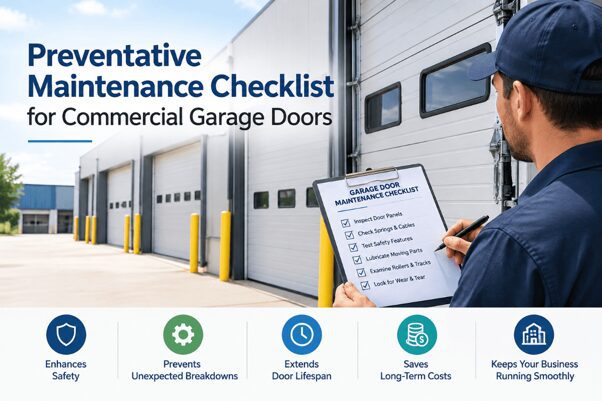
Preventative Maintenance Checklist for Commercial Garage Doors
What if a garage door stops working during the busiest part of your workday? Deliveries can be delayed, workers may face safety risks, and repairs can become expensive. Preventative maintenance for commercial garage doors helps businesses find small problems before they turn into major issues.
Regular care keeps important parts working properly and helps reduce sudden breakdowns. This guide explains what to inspect, what to include in a maintenance plan, and when professional help is needed to keep a commercial garage door safe and reliable.
Why Should Businesses Maintain Their Commercial Garage Doors?
Commercial garage doors often work much harder than residential doors. A warehouse, store, or service center may open and close its door many times each day. This repeated use can slowly wear down springs, cables, rollers, tracks, hinges, and openers.
Regular commercial garage door maintenance helps find these problems early. A loose part may seem small at first, but continued use can make the damage worse. Fixing the problem early may also help prevent a sudden breakdown during business hours.
Maintenance can also help keep the door moving smoothly. A properly working door makes it easier for workers to move vehicles, equipment, and products through the building.
Frequently Asked Questions
Q1: Why is preventative maintenance important for commercial garage doors?
Preventative maintenance helps businesses find worn or damaged parts before they cause larger problems. It can support safer operation, reduce unexpected downtime, and help businesses plan repairs instead of dealing with sudden failures.
Q2: How often should commercial garage doors receive preventative maintenance?
The right schedule depends on the type of door, how often it is used, and the conditions around it. A busy commercial door may need more frequent service than one used only a few times each day.
What Parts Should You Examine During a Garage Door Inspection?
A commercial garage door inspection should cover the entire system. Looking only at the door panels is not enough because many important parts are hidden or located around the door.
- Start by checking the panels for dents, cracks, rust, or other damage. Damaged panels can affect the door’s balance and movement.
- Next, inspect the tracks. They should be straight, secure, and free from objects that could block the rollers. Loose bolts or bent tracks can make the door move unevenly.
- Springs and cables should also be checked for visible wear or damage. These parts can hold a great deal of tension, so they should not be adjusted or repaired without proper training.
- Rollers, hinges, brackets, and fasteners should be checked for wear. Listen for unusual sounds when the door moves, as grinding, squeaking, or rattling may point to a problem.
- The opener should also be tested. It should start, stop, and reverse correctly without struggling.
Read More :- Manual vs Automatic Garage Doors: What’s Right for You?
What Makes Sectional Door Checks Different?
A commercial sectional garage door inspection should look at every section of the door. Each panel should move smoothly as it travels along the tracks. Check the hinges that connect the sections and look for damaged panels or worn rollers. The tracks should also be properly aligned.
If one section looks uneven or the door shakes while moving, the system should be inspected before the problem becomes worse.
How Can a Business Create a Simple Maintenance Checklist?
A commercial garage door maintenance checklist for businesses makes regular care easier. It gives workers and service professionals a clear list of items to review.
A basic checklist can include:
- Inspect door panels for visible damage.
- Check tracks for bends or blockages.
- Examine rollers and hinges.
- Look for damaged cables.
- Check springs for visible issues.
- Test the opener.
- Test wall controls and remotes.
- Watch how the door moves.
- Check safety sensors.
- Listen for unusual sounds.
- Record service dates.
- Note repairs and parts that may need attention.
Keeping a service record is also helpful. Businesses can use it to track repairs, notice repeated problems, and plan future maintenance.
Frequently Asked Questions
Q1: What should be included in a commercial garage door maintenance checklist?
A good checklist should cover the door panels, tracks, springs, cables, rollers, hinges, brackets, opener, controls, and safety equipment. It should also include the date of each inspection, problems found, repairs completed, and parts that may need attention later.
How Do Safety Sensors Help Protect Workers?
Safety sensors are designed to help prevent a garage door from closing when something is in its path. This feature is especially important in busy commercial areas where people, vehicles, and equipment may move through the doorway.
A commercial garage door safety sensor inspection should check that the sensors are clean, aligned, and working properly. Keep the area around the sensors clear. Dirt, dust, accidental bumps, or poor alignment can affect their operation.
Businesses should never remove or bypass safety sensors just to keep a door running. If the sensors do not work correctly, the system should be inspected by a qualified professional.
How Can Regular Maintenance Make a Workplace Safer?
Commercial garage doors often operate near employees, forklifts, delivery trucks, and other equipment. A door that moves suddenly or fails to stop correctly can create a serious hazard. This makes commercial garage door maintenance to improve workplace safety an important part of regular building care.
During maintenance, professionals can look for loose hardware, worn rollers, damaged cables, broken components, and sensor problems. They can also check whether the door is moving at the correct speed. Employees should be encouraged to report strange noises, jerky movement, visible damage, or other changes as soon as they notice them.
Frequently Asked Questions
Q1: Can regular maintenance extend the lifespan of commercial garage doors?
Yes. Regular maintenance can help reduce unnecessary wear and identify small problems before they become major repairs. Keeping parts in good condition and replacing worn components when needed can help a commercial door perform reliably for a longer period.
When Is Professional Maintenance the Better Choice?
Commercial garage doors have heavy components and high-tension parts. Trying to repair certain components without the right training can lead to serious injury or additional damage. Professional commercial garage door preventative maintenance gives businesses access to trained professionals who can inspect and service the complete system.
A professional can examine springs, cables, tracks, rollers, hinges, openers, safety sensors, and other important parts. They can also identify problems that may not be easy to see during a basic visual check.
Professional help is especially important when a door becomes stuck, falls too quickly, makes loud sounds, moves unevenly, or shows signs of damaged springs or cables.
What Should Businesses Do Before Hurricane Season?
Severe weather can place a lot of stress on commercial garage doors. Strong winds and flying debris may damage panels, tracks, hardware, and other components. Businesses in areas affected by hurricanes should have their doors checked before storm season.
This gives them a chance to repair weak or damaged parts before severe weather arrives. Commercial hurricane garage doors repair may be necessary after a storm if the door has visible damage or no longer works correctly.
Do not force a damaged door open or closed after a hurricane. Doing so could make the damage worse. A professional should inspect the system before it is used again.
Frequently Asked Questions
Q1: Are commercial garage door safety inspections necessary?
Yes. Safety inspections can help identify problems with sensors, hardware, springs, tracks, and other components. They are especially useful for commercial doors that operate frequently or are located in busy work areas.
When Should You Call for Commercial Garage Door Service?
Businesses should not wait for a complete door failure before scheduling commercial garage door service. Small warning signs can often point to a developing problem. Watch for grinding sounds, slow movement, shaking, damaged panels, loose hardware, or a door that does not close properly.
A scheduled maintenance plan can help businesses stay ahead of these problems. High-use doors may need more frequent inspections, while seasonal checks can be useful before hurricane season or periods of heavy business activity.
Planned service can also make repair costs easier to manage because problems may be found before they cause major damage or interrupt business operations.
How Can Businesses Keep Their Garage Doors Reliable?
A reliable commercial garage door can help keep daily operations moving while reducing unnecessary safety concerns and interruptions. Regular inspections, timely repairs, and professional care can protect important components and help businesses avoid unexpected problems.
Connect With Us!!
At Sobrino Garage Door, we help businesses with commercial garage door maintenance, repairs, installation, and emergency services. We can inspect your system and recommend practical solutions based on its condition and use.
Contact us today to schedule professional service and keep your commercial garage door safe, dependable, and ready for daily business needs.
Sobrino Garage Door
Sobrino Garage Door LLC is a trusted provider of professional garage door services, specializing in installation, repair, and maintenance for residential and commercial properties. With a commitment to quality workmanship and customer satisfaction, the team delivers reliable, efficient, and affordable solutions tailored to every client’s needs. From emergency repairs to modern garage door upgrades, Sobrino Garage Door LLC combines industry expertise with top-tier products to ensure long-lasting performance and security. Their dedication to excellence has made them a go-to choice for dependable garage door services.